How Laser Tattoo Removal Works
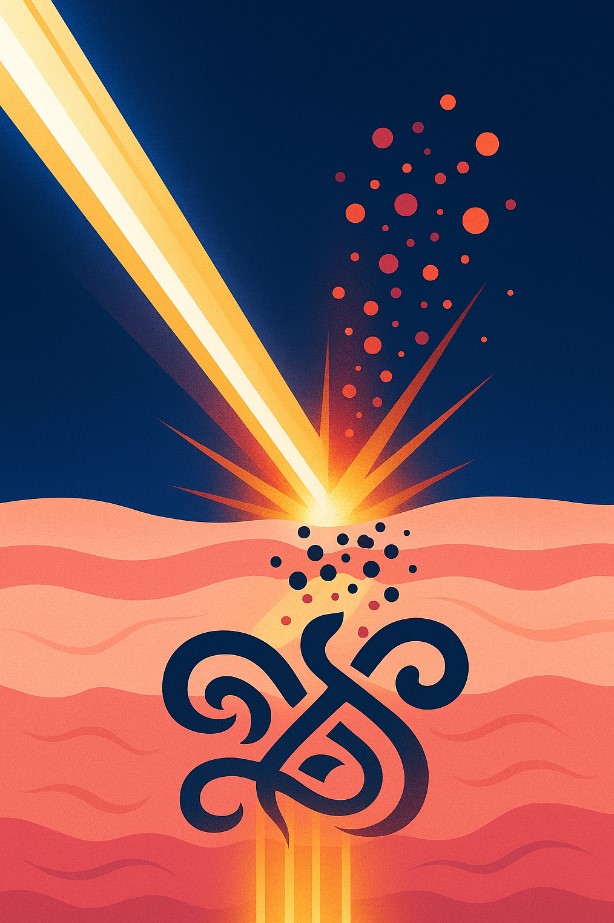
Laser tattoo removal uses high‑intensity light pulses to break down ink particles in your skin. The shattered pigment fragments are flushed away by your lymphatic system, causing the tattoo to fade over time. The process depends on ink color, depth, age and your skin type.
Session overview
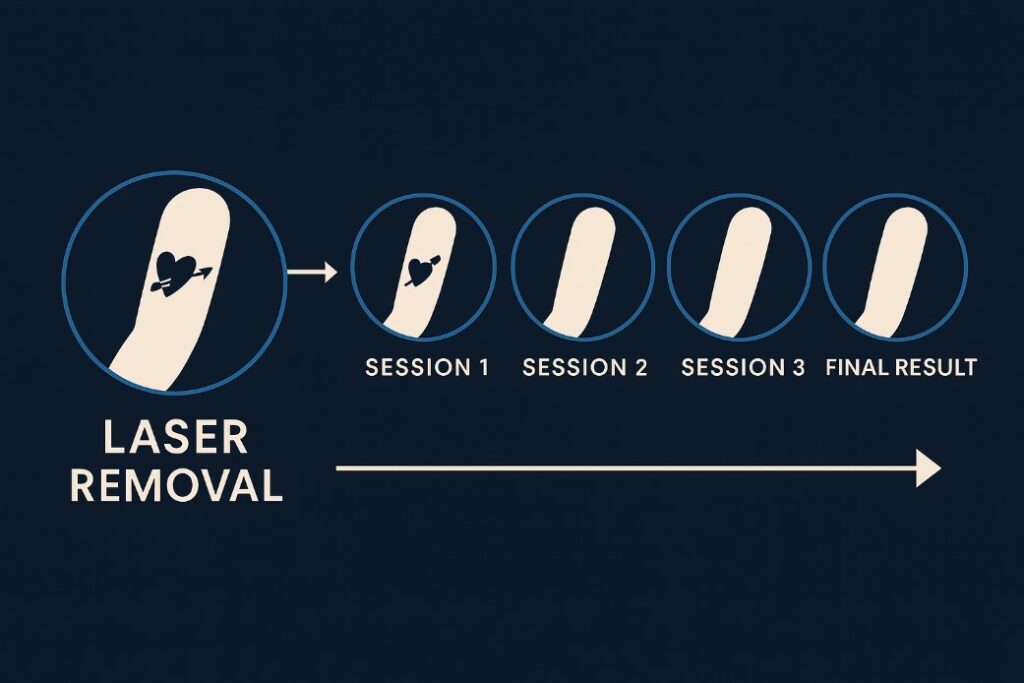
Consultation & first treatment
- Your provider examines your tattoo and estimates how many sessions you’ll need.
- Expect a brief session (10–30 minutes) where the laser targets the ink.
- The sensation is often compared to a rubber band snap; numbing cream and cooling devices can improve comfort.
- After treatment, apply antibiotic ointment, keep the area covered and avoid direct sun exposure.
Sessions 2–4: Fading begins
- Sessions are scheduled 6–8 weeks apart to allow your skin to heal and your body to clear the ink.
- Each session breaks down more pigment; darker colors fade faster than lighter ones.
- Continue moisturising, stay hydrated and avoid picking at scabs to prevent scarring.
Sessions 5–7: Significant fading
- Most of the ink is gone, but stubborn pigments may need extra sessions.
- Treatments feel less intense as the tattoo lightens.
- Protect the area from friction and use soothing lotions to support healing.
Session 8+: Final touch‑ups
- Only small amounts of pigment remain; sessions are shorter and discomfort is minimal.
- Keep moisturising and avoid tanning until the skin is fully healed.
Most clients need 6–10 sessions to achieve their desired results. Between sessions, follow proper aftercare and give your skin time to recover.